

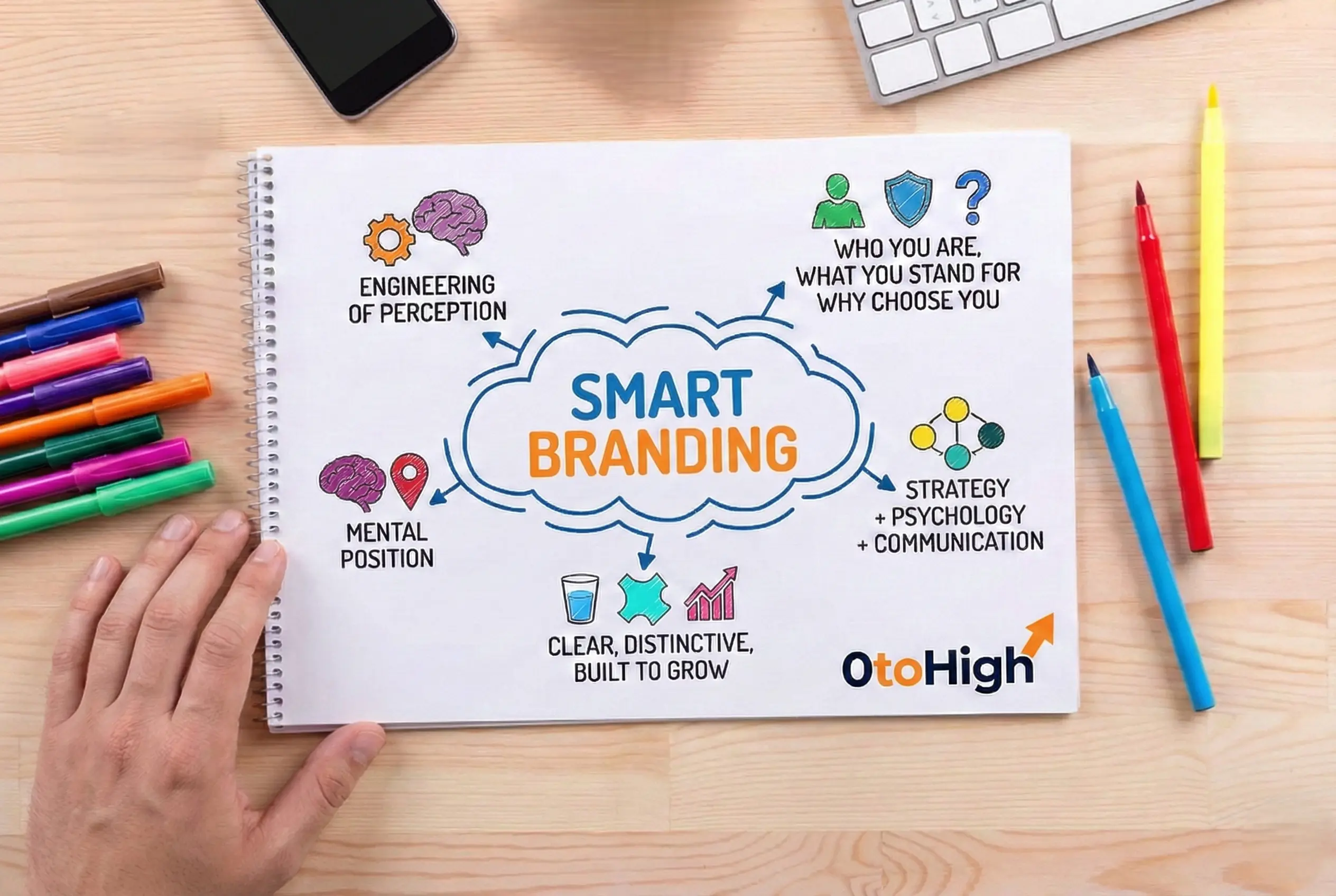
How Smart Branding Builds Long-Term Business Recognition
Branding has evolved beyond logos and visual identity into a complete business communication system that influences how customers perceive value, trust, and credibility. In increasingly competitive markets, businesses that invest in strategic branding create stronger recognition and establish more memorable positions in the minds of customers over time.
VisualEdgeLighting approaches branding as a combination of positioning, visual communication, customer perception, and market consistency designed to help organizations build stronger business presence and create experiences that remain recognizable across every interaction.

Recognition creates attention. Strong branding creates preference.
Why Branding Has Become a Growth Asset
Customers make decisions faster than ever before and often associate quality, trust, and professionalism with how consistently a business presents itself across different environments and communication channels. Branding creates familiarity and reduces uncertainty by helping audiences immediately understand what a business represents, what values it communicates, and what level of experience they should expect from future interactions. In modern markets where alternatives are widely available and customer attention is increasingly limited, strong branding reduces decision friction and creates stronger emotional connection. Businesses with recognizable identity systems are more likely to remain memorable, communicate value more efficiently, and establish stronger long-term relationships with customers while maintaining competitive relevance in changing market conditions.
Organizations with clear identity systems are more likely to maintain stronger customer retention, improve perceived value, and achieve better communication efficiency across marketing and business operations. A structured branding approach supports consistency across campaigns, customer experiences, internal communication, and business positioning while reducing confusion and strengthening recognition. Over time, effective branding becomes a business asset that supports growth, encourages repeat engagement, and creates stronger market differentiation without depending entirely on pricing or promotional activities to remain competitive.
Building Consistency Across Every Customer Touchpoint
Modern customer journeys involve websites, advertisements, social media platforms, business presentations, physical environments, customer service interactions, and multiple forms of digital communication. Every touchpoint contributes to overall brand perception and influences how customers remember and evaluate a business over time. Even small inconsistencies between visual identity, messaging, or experience quality can weaken trust and reduce overall communication effectiveness. Businesses that create unified experiences across channels build stronger confidence, improve recognition, and establish more reliable customer expectations throughout the entire engagement process.
Consistency across messaging, design language, visuals, and communication style helps businesses create stronger emotional connection while improving customer confidence and strengthening recall over time. When customers repeatedly experience aligned communication and recognizable identity systems, businesses become easier to remember and easier to trust. Consistent branding also improves internal efficiency because teams operate under clearer standards, resulting in more effective execution across campaigns, promotions, and customer-facing initiatives while supporting scalable long-term growth.
The Role of Creative Direction in Brand Positioning
Creative direction determines how a business appears, communicates, and differentiates itself in competitive environments through deliberate visual and communication decisions that support broader business objectives. Strong creative systems create alignment between visuals and business goals while ensuring that messaging remains recognizable across multiple customer interactions. Creative positioning influences how customers interpret quality, credibility, innovation, and professionalism, making it one of the most influential factors in shaping overall brand perception and market positioning.
Strategic branding decisions support scalability because businesses with structured identity systems can expand communication channels without losing consistency or weakening their market position. As organizations grow, maintaining visual standards and communication alignment becomes increasingly important to preserve recognition and customer trust. Businesses that invest in creative structure early often experience smoother expansion, stronger engagement quality, and greater long-term adaptability in changing market conditions.
How Branding Influences Customer Decisions
Customers often compare alternatives before selecting services or products, and branding frequently becomes the deciding factor when quality and pricing appear similar across available options. Strong branding influences perception by creating confidence, reducing uncertainty, and helping audiences associate positive expectations with the business experience. Businesses that communicate professionalism, clarity, and consistency improve customer confidence and encourage stronger engagement while increasing the likelihood of repeat interactions and recommendations.
Brand experiences that remain visually and emotionally consistent generate stronger loyalty and support long-term business sustainability. Customers tend to remember how businesses made them feel rather than isolated promotional messages, making branding a long-term investment rather than a short-term marketing activity. Organizations that continuously strengthen brand experiences create stronger relationships, improve market perception, and establish more resilient customer communities over time.
Conclusion
Branding is no longer limited to aesthetics. It has become a strategic business function that influences growth, customer trust, communication quality, long-term recognition, and overall business perception in increasingly competitive environments. Organizations that treat branding as a structured system rather than a visual exercise often achieve stronger consistency, better engagement outcomes, and more sustainable business performance while improving their ability to adapt to changing customer expectations and market conditions.
VisualEdgeLighting helps businesses develop branding systems that combine strategy, creativity, and execution to build stronger identity, improve visibility, and support sustainable business growth in modern competitive environments. Through integrated communication approaches and structured visual experiences, businesses can strengthen recognition, improve customer relationships, and create long-term value that extends beyond individual campaigns or short-term promotional activities.
Leave a Reply